Back in 2007, questions by visitors taking part in farm tours made us think in a different way. “Why are the cows not with the calves?” inspired us to look at doing things differently.
In the UK there was very limited information, but in Europe cow and calf farms were already starting to develop. Myself, the herdsman at the time and his wife, the farm's visitor centre manager, David and Wilma, and David’s mum and dad all drove across to the Netherlands and spent two days visiting farmers to see if it could be done.
A resounding “yes we can do that”, set the wheels in motion.
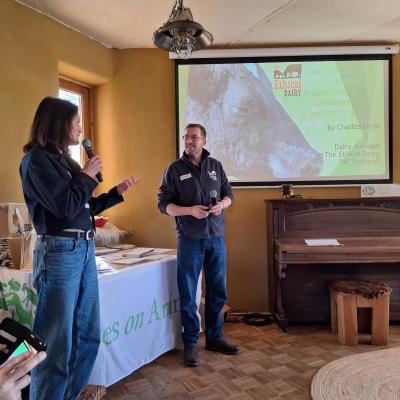
So this week it’s been wonderful to return to the Netherlands by invitation of Kalverleifde director Janina van der drift and Lesley Moffat of Eyes on Animals, an animal welfare charity and campaigning group. The goal has been to use our story to inspire not only Dutch farmers, but farmers from across the world.
Of around 60 delegates in the room 12 different nations were represented! Some I had already had contact with, and new faces who had heard of us and were keen to learn more.
On the first day, each of us who were invited to speak had around 20 minutes to give an insight into what we do and I chose to share the current management process and show how current protocols have helped to resolve the issues we experienced in the past.
Sharing the poem, 'Just a Cow', has become a key part of my presentation and I think for all the farmers in the room it really hits a nerve. I can read it to myself no problem but reading it out loud it can sometimes get stuck in my throat.
Of course as with any aspect of life we should never think we have learned everything about a subject and listening to the other speakers tell their stories, I was inspired to look at some of the things we do and wonder whether we should tweak things a little. There is always some trepidation about changing a system we know works, but the discussion around weaning practice took up a large proportion of the evening conversation and made me rethink how we approach it. I certainly have some ideas to put to the team on my return.
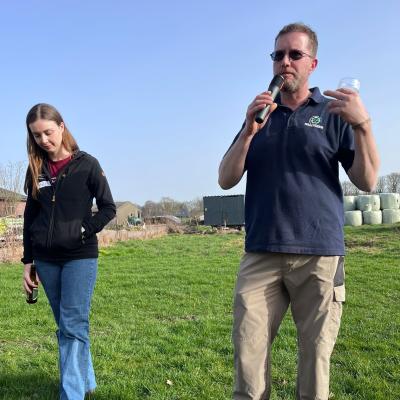
Day two focused on visiting farms that had either an established cow-calf-contact system or were looking to transition the farm, with some looking at using foster cows as a way to trial different management strategies.
As we discovered on our original trip in 2007, these farms are on a smaller scale to most in the UK, certainly much smaller than our farm. With around 60 cows they are able to support two or more full time employees, as well as often including some diversification into milk processing, a farm shop and holiday accommodation.
One farm in particular used a small mobile caravan in the pasture with the cows, the chickens rooting through the dung pats , distributing the manure across the pasture whilst producing a small number of eggs for staff and customers. Three very healthy looking pigs near the cheese production area definitely enjoyed the fresh supply of whey, a truly integrated farm, and a feast of ideas.
The final farm of the day aspired to be a cow-calf-contact farm and we discussed how this could be achieved, however I was reminded of our own experience when talking with the staff that it needs to be a whole team approach and everyone on the same page.
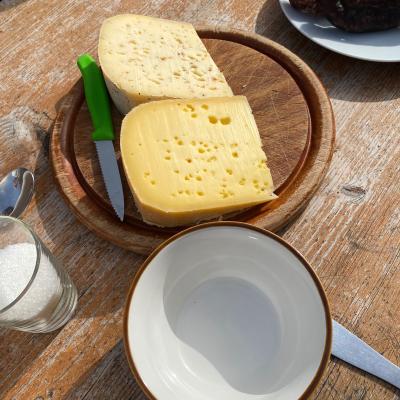
Good food, good beer and a real taste of spring - 18 degrees celcius! - made for a great couple of days. I am looking forward to getting back home and seeing the girls, because with just 20 days till spring calving begins there’s plenty to do. I will of course keep you updated with any of the tweaks to the system we may make.
I'm going to put my passport away for a couple of months before heading to Romania at the end of May to join the next in-person Transform Dairy Network meeting in Bucharest, where I look forward to connecting again with the wider European movement for cow-with-calf dairy. Cow-calf-contact dairy really is gaining momentum and it’s great to feel that by working together, we can be a driving force for real change.
Charles Ellett, Dairy Manager